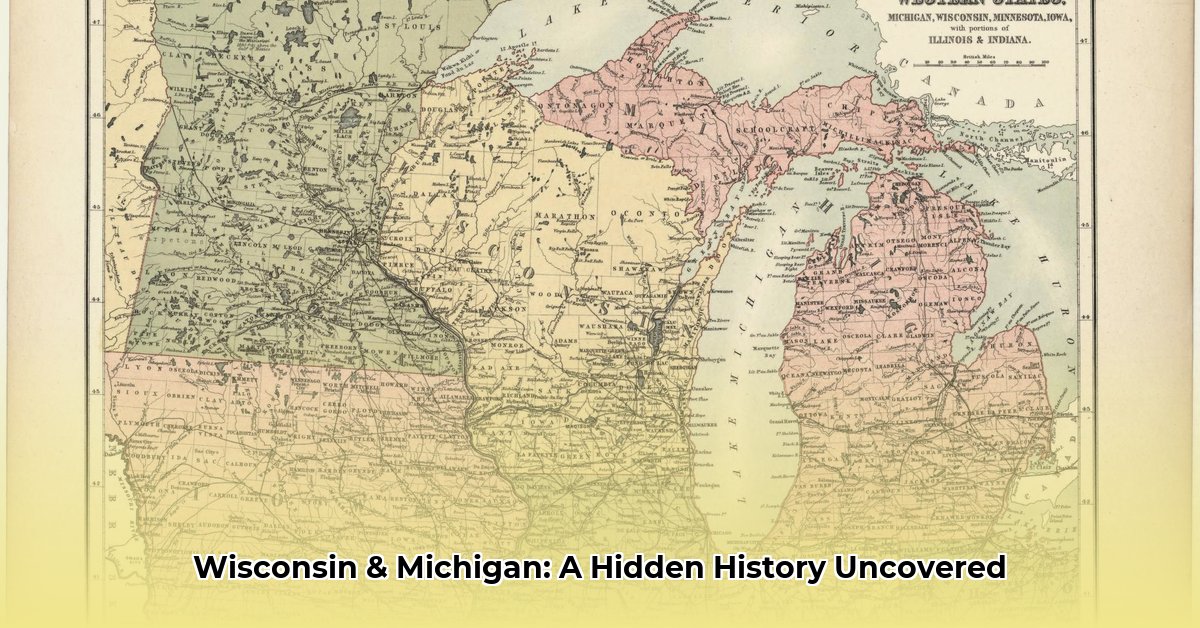
Ever wonder why Michigan's Upper Peninsula seems almost attached to Wisconsin? It's not a quirk of nature, but the fascinating result of a historical showdown: the Toledo War. This article unravels the story behind this unusual border, exploring its historical context and offering practical insights for tourists, educators, and anyone curious about this unique corner of the Midwest. For a visual aid, check out this helpful map.
The Toledo War: A Battle for the Border
The seemingly odd placement of Michigan's Upper Peninsula (UP) is directly linked to the Toledo War (1835-1836), a tense dispute between Michigan and Ohio over the fertile Toledo Strip along Lake Erie. Early maps were notoriously inaccurate, leading to overlapping claims and escalated tensions. Ohio, a more established state, seemed to have the upper hand. But Michigan, vying for statehood, cleverly used its claim to the then-relatively undeveloped UP as a bargaining chip.
This situation evolved into a three-way negotiation with the federal government. The compromise of 1836 gave Ohio the Toledo Strip, including Toledo, while Michigan received the seemingly less valuable UP. This seemingly insignificant land swap had monumental, unforeseen consequences.
Did you know? The Toledo War involved more than just land; it highlighted the inaccuracies of early cartography and the challenges of establishing clear state boundaries. This historical event continues to shape the political and economic landscape of the region.
Michigan's Unexpected Fortune: The Rise of the Upper Peninsula
Initially, the UP was viewed as a remote and underdeveloped area. However, the discovery of vast iron ore deposits transformed its economic prospects. The subsequent boom fueled Michigan's industrial growth for decades, turning the UP from an apparent afterthought into a vital economic engine. This unexpected prosperity reshaped Michigan's identity and trajectory, showcasing how initial perceptions can be dramatically overturned.
The Modern Border: A Legacy of Compromise
The present-day Wisconsin-Michigan border largely reflects the 1836 agreement, although minor adjustments have been made over time. Looking at a map, you can still see the enduring imprint of the Toledo War, a visible testament to this pivotal event. This seemingly simple line on a map tells a compelling story of negotiation, compromise, and unforeseen consequences.
Actionable Insights: Applying History to the Present
Understanding the historical context of the Wisconsin-Michigan border offers practical applications across several sectors.
1. Tourism: Joint tourism initiatives could highlight the shared history and scenic beauty of the region, creating cross-border travel packages that boost both states’ economies. This approach would benefit local businesses and enhance visitors' experiences.
2. Education: Incorporating the Toledo War into history and geography curricula can make learning more engaging and relevant for students. This would offer a real-world example of boundary disputes and the process of compromise.
3. Transportation: Improving signage along border crossings and optimizing cross-border transport routes would serve travelers better and promote regional economic cooperation. This translates to a more efficient travel experience and stronger inter-state relations.
Actionable Steps: Putting History into Practice
Here's a practical guide for leveraging the shared history:
Tourism Boards (MI & WI): Collaborate on joint marketing campaigns highlighting the shared historical narrative and scenic beauty within one year. Long-term, develop cross-border tourism packages and invest in joint infrastructure improvements.
Educational Institutions: Integrate the Toledo War into curricula within one year. Long-term planning includes fostering collaborative research projects focusing on the region's historical impact and environmental issues.
Transportation Agencies: Improve border crossing signage and multilingual informational materials within one year. Long-term goals include optimizing cross-border routes and improving transport infrastructure.
This guide provides a framework for understanding the fascinating story behind the Wisconsin-Michigan border. It highlights the enduring impact of history on geography and encourages exploration of the region's unique blend of natural beauty, historical significance, and vibrant culture. By understanding this history, we gain a deeper appreciation for this unique part of the Midwest.